Pest Management
Pest management is an important factor in reducing the risk of the spread of disease among your plants. Unwanted pests will show up. It is wise to have plan on how you will get rid of them. Here at Kale Lane Dahlias we use as many organic, soil wise, gardening practices as possible. We prefer to use beneficial insects instead of chemical sprays to remove pests. When determining which beneficial insects are appropriate for your garden, reach out to your local beneficial insectary. Here in Bellingham, WA we use Sound Horticulture for all our beneficial needs.
Aphids
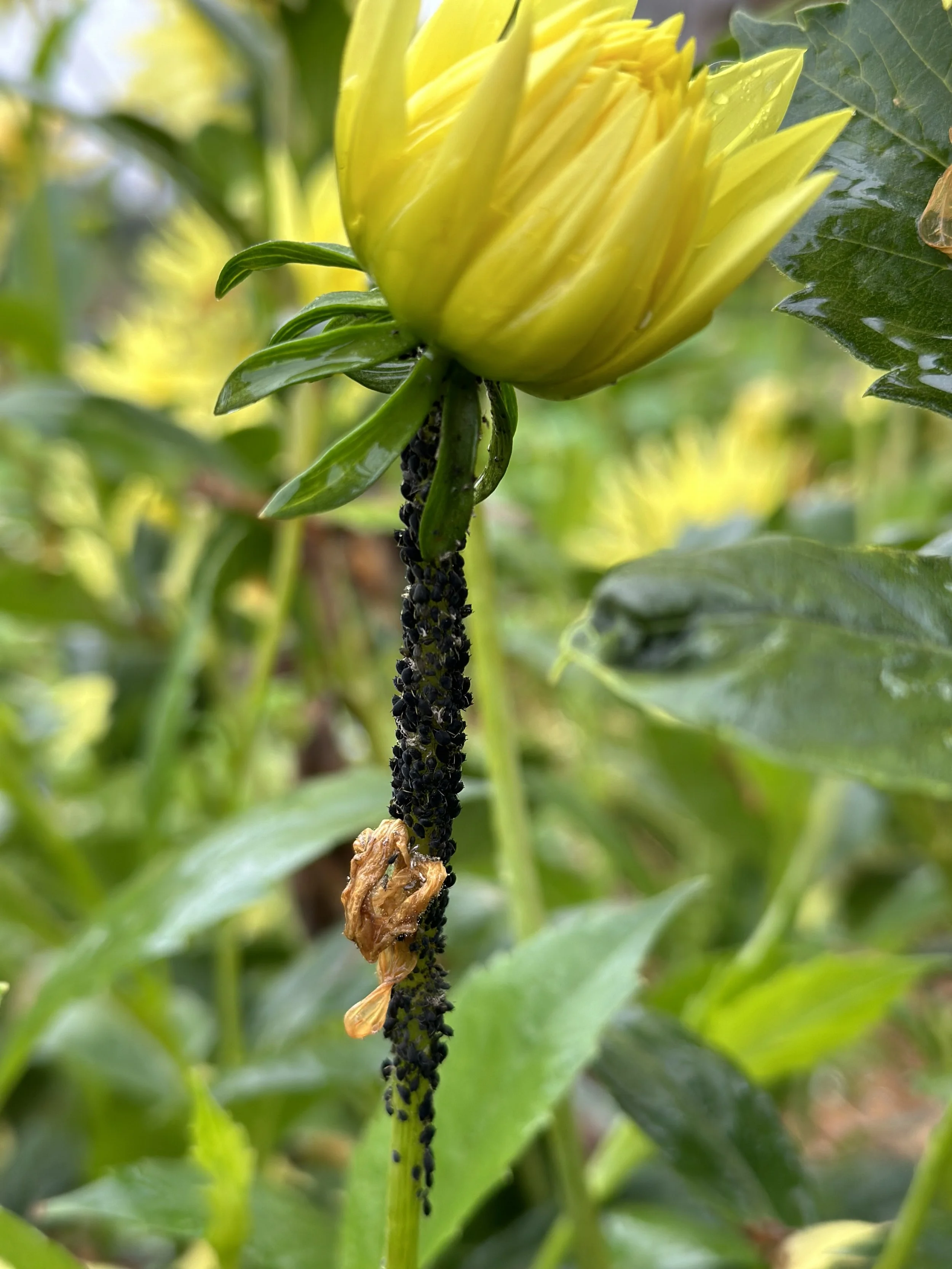
Green and Brown Lacewing larvae are excellent aphid eaters. Release adults and/or larvae over the canopy of your plant. A few days later you should see your aphid pressure reduced if not eliminated. You can also purchase sachets that hang on your plants and slowly release live lacewings. Lady bugs are another option for aphid management however there is some more recent discussion on the efficacy of their use in home gardens. We do not purchase and release lady bugs, rather encourage them naturally.
Interplanting sweet alyssum is a research based effective way to help increase your gardens natural population of the syrphid fly (hoverfly) by providing them a food source. Syrphid flies, like lacewings, are great aphid predators. Sweet alyssum is a prolific self-seeder in specific growing zones. It is wise to make sure your area does not consider it an invasive plant.
Thrips
Cucumeris and Swiriskii Mites are an affordable and effective way to eliminate thrips on flowers. Release them within the canopy of your plants and they will do the job for you. Minute Pirate Bugs are another excellent thrips hunter. They are more costly and a bit more noticeable in your garden.
Wireworms
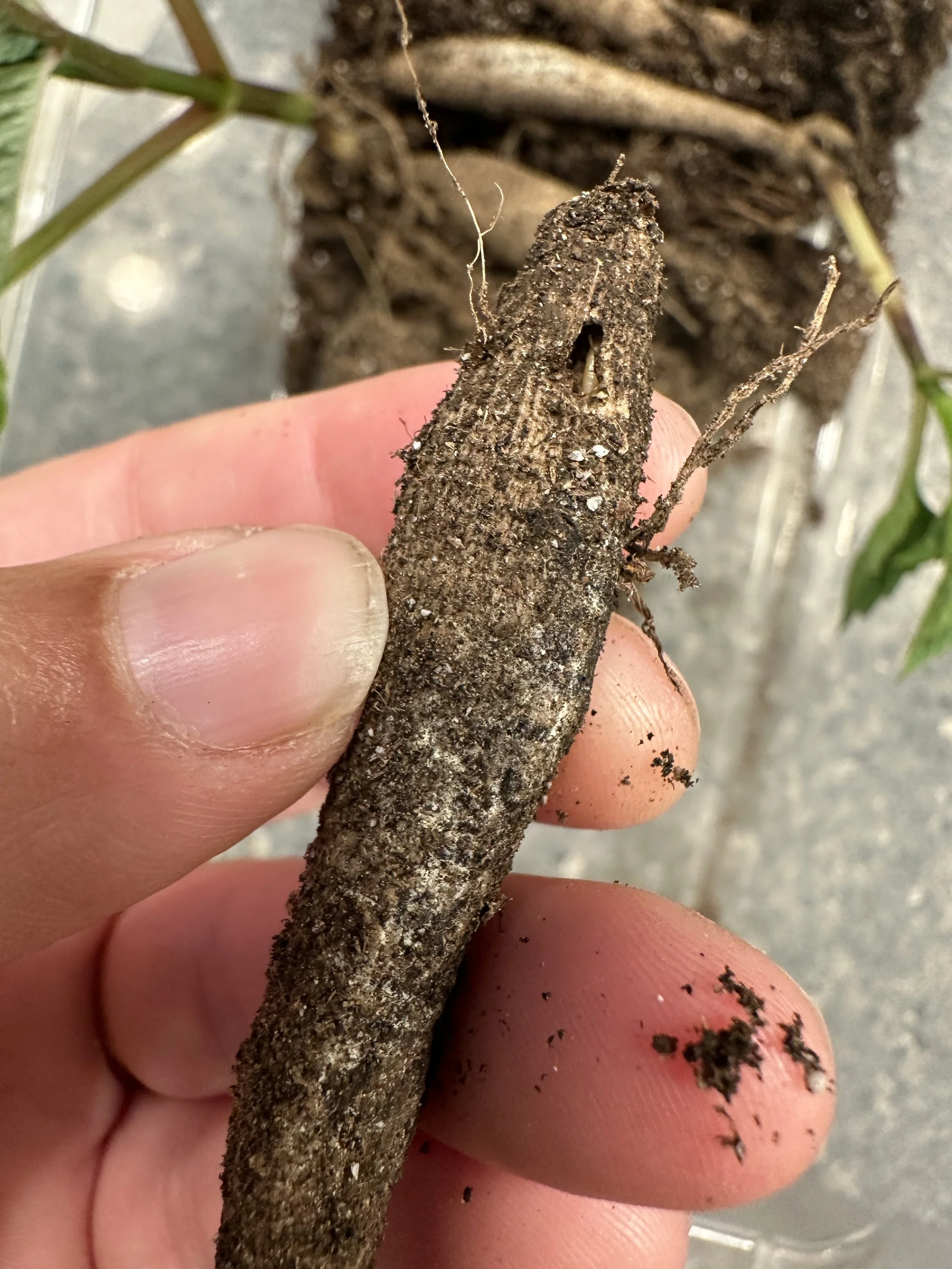
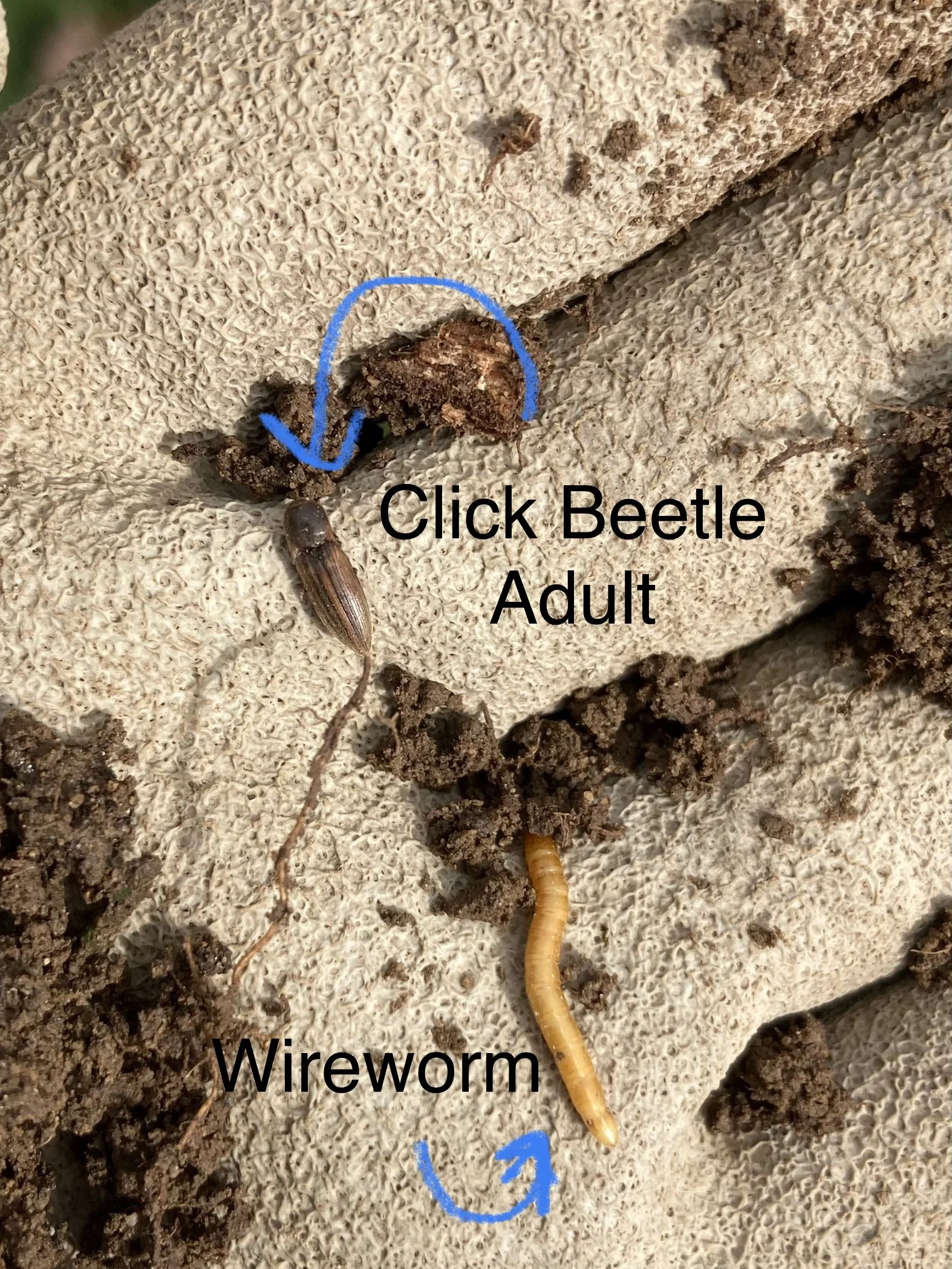
We have battled significant wireworm pressure once we removed existing sod for new dahlia gardens. Wireworms, the larvae of the click beetle, are one inch long orange worms that burrow in underground plants. Damage can range from aesthetic to overall death of the plant.
We have tried several methods to help reduce wireworm pressure including:
Potato traps can be placed in the soil as a way to bait the wireworms into eating the potatoes rather than your crop. Frequently replacing the potatoes helps manually remove them from your garden spaces.
Water in beneficial nematodes on a regular schedule. Nematodes have the potential to eat small wireworm larvae and help reduce future populations of wireworms.
Plant mustard seed as a cover crop. Stopping and turning in the mustard right as the plant is about to flower immediately prior to dahlia season has potential to work as a biofumigant. The wireworms do not like the smell of the decomposing mustard plant and will move along.
We have applied LALGUARD M52 OD, a pathogenic fungus Metarhizium brunneum. This fungus will adhere to any pest that comes in contact with it and eventually lead to pest death.